

Man Utd Tactical Breakdown: Pressing Shape, Build-Up Play, and Chance Creation
Uncategorized man utd tacticsManchester United are usually judged on outcomes, but the story of a season is often written in patterns: how the first press is set, where the midfield line sits, how the ball moves from centre-backs into the forward line, and what kind of chances get created when the game is tight. This guide focuses on man utd tactics in a way that feels practical. You’ll be able to watch one match and spot the pressing shape, understand why certain passing lanes open or close, and see why some attacks end with clean cutbacks and others end with rushed shots.
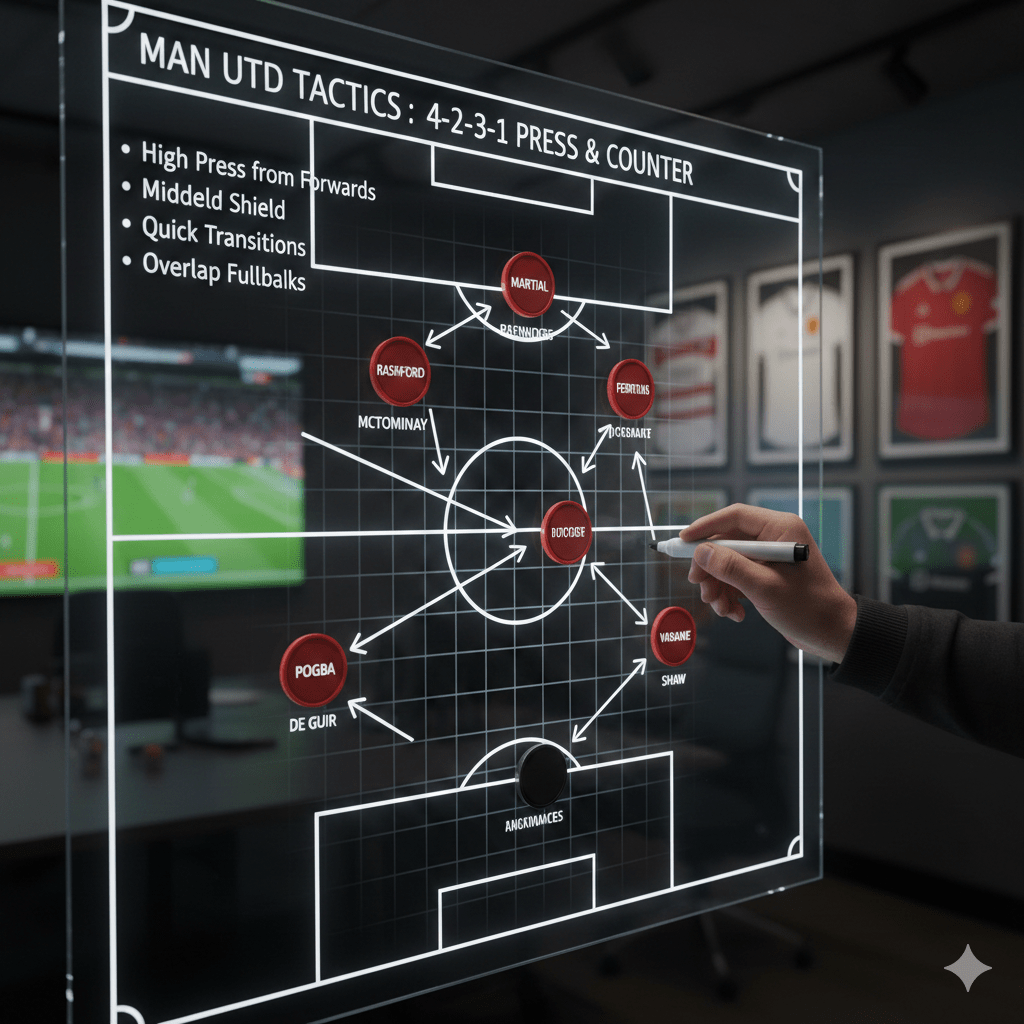
A team can look totally different from week to week without changing formation on paper. One opponent forces a high press, another invites a slower build, another punishes any loose “rest defence” with counters. That’s why Manchester United tactics are best explained by phases: what happens without the ball, what happens in the first two passes, what happens around the final third, and what happens right after possession is lost.
Why “Man Utd tactics” is searched so often
People search man utd tactics when results don’t match expectations. A 2–0 win can still feel messy if the press never connects and the midfield gets stretched. A draw can feel positive if the structure looks stable and chances are repeatable. Fans also search Manchester United tactical setup when a new shape shows up on matchday, when the first XI changes, or when injuries force a different plan.
Tactics talk can get abstract fast, so this breakdown keeps it grounded. You’ll see what pressing triggers look like, what build-up routes are common, and how chance creation tends to work when United are at their best.
Tactical snapshot in one page
If you only remember one thing, remember this: man utd tactics usually hinge on spacing between lines. When the distances are right, the press feels coordinated, the ball progresses with fewer risky passes, and the final pass arrives earlier. When the distances stretch, you get disconnected presses, long recoveries, and attacks that rely on individual moments.
That spacing is influenced by three choices: how high the front line starts, whether the midfield steps up behind it, and how brave the back line is when defending open grass. Get those three aligned and United look front-foot. Lose alignment and the match turns into a transition game, even if the plan was to control.
Pressing shape and how it’s supposed to work
The “first line” press: what the forwards are trying to do
In man utd pressing, the first job is rarely “win the ball instantly.” The first job is to force play into a predictable lane. That might mean showing the ball wide, blocking the return pass into midfield, and setting up a trap near the touchline. You’ll often see the centre-forward curve their run to take away the easy pass back inside, even if it looks like they’re not sprinting straight at the ball.
When United press well, the forwards don’t chase shadows. They move as a unit, keeping the ball in front of them, and trying to make the next pass feel uncomfortable. The press becomes a chain: one player forces the direction, the next player jumps the lane, and the midfield squeezes to collect second balls.
High press vs mid-block in Man Utd tactics
A high press is aggressive and entertaining, but it demands perfect timing. If one player goes and the line behind doesn’t follow, the opponent can play through the gap and suddenly United are chasing back toward their own goal. A mid-block is less glamorous, but it can be smarter in certain matches, especially when the opponent’s centre-backs are comfortable playing long diagonals behind the press.
In Manchester United tactics, a mid-block often aims to protect the centre, force play wide, and keep the team compact. The press still exists, but it’s selective. The front line doesn’t always jump at the first pass; they wait for a cue. When that cue appears, the whole unit steps up together.
Pressing triggers you can watch for
A pressing trigger is a moment that tells players: “Go now.” Common triggers include a poor first touch, a pass into a fullback facing their own goal, a bouncing ball, or a switch that arrives slightly slow. In those moments, the nearest attacker jumps, the next attacker blocks the return pass, and the midfield line steps up to deny the “third man” outlet.
When man utd tactics are clicking, you’ll see the midfielders look brave. They’ll step into passing lanes early rather than backing off. That’s often the difference between a press that wins the ball and a press that simply runs.
The touchline trap and why it matters
The touchline is a natural extra defender. If you can force the ball wide and keep it there, the opponent loses angles. United can then press with confidence because there are fewer escape routes. The wide player presses the receiver, the nearest midfielder covers inside, and the fullback can step up to compress space.
This is one reason fans talk about Manchester United tactical setup so often. A small tweak—like a winger starting slightly narrower—can make the trap easier to spring. A small tweak the other way can make the press easier to bypass.
What happens when the press fails
No press works every time. The question is what happens after it fails. If United have a stable “rest defence,” the opponent might break the first line but still struggle to reach the box. If the rest defence is loose, a single pass can turn into a 3v3 sprint.
When you hear criticism about man utd tactics, it’s often about this moment. The press looks brave, but the coverage behind it looks late. Fixing that is less about telling the forwards to run harder and more about the spacing behind them.
Build-up play: how the ball moves from the back to the front
Build-up goals in Manchester United tactics
Build-up isn’t just “passing around the back.” It’s a method of reaching the opponent’s half with balance, so the next action can be a clean attack rather than a desperate duel. Good build-up has two goals: progress the ball and keep enough players behind it to defend the counter.
In man utd tactics, build-up can look different depending on opponent pressure. Some matches demand short combinations with the goalkeeper involved. Other matches demand quicker progress into wide areas to bypass a tight press.
First phase build-up
The first phase is those opening passes around the goalkeeper and centre-backs. The biggest decision is whether to invite pressure or avoid it. Inviting pressure can be useful because it pulls opponents forward and opens space behind them. Avoiding pressure can be useful because one mistake in this area is expensive.
United’s first phase often depends on the fullbacks. If they stay deep, they offer simple outlets. If they step higher, they drag markers and open lanes into midfield. If they invert inside, they can create an extra body near the ball, which helps progression when opponents press with two forwards.
Using the goalkeeper as an extra passer
Modern build-up often uses the goalkeeper as a spare man. That helps create a free player and forces the opponent to choose: press the keeper and leave someone free, or hold shape and let United circulate. When you watch Manchester United tactics, notice whether the goalkeeper is being used to bait pressure or simply to reset possession.
This is also where risk lives. One sloppy pass can become a shot in seconds. That’s why many teams mix it up: short when it’s on, longer when the press feels too tight.
The centre-back split and the “lane opening” effect
A classic build-up pattern is the centre-backs splitting wider, creating a lane for a midfielder to receive. That midfielder might drop in as a temporary third centre-back, or they might stay slightly higher and receive on the half-turn. When it works, United progress through the centre with control. When it fails, the pass becomes predictable and the opponent steps in.
For fans searching man utd tactics, this is one of the easiest patterns to spot. Look for a midfielder dropping closer to the defenders, then look for how quickly the next pass goes forward.
Second phase build-up
Second phase is the area around the halfway line where the match often turns into a chess game. The opponent starts to shift across, the passing lanes narrow, and United have to choose between patience and speed. In this phase, body shape matters. Receiving side-on gives more options. Receiving square tends to invite pressure.
United’s best second-phase moments usually involve a “third man” run. The ball goes into a midfielder, gets set back, and then goes forward into a runner who has arrived behind the first line of pressure. It’s simple in theory, hard under pressure.
Inverted fullbacks vs wide fullbacks
An inverted fullback moves inside during build-up. This can create numbers in midfield and help control transitions, since the fullback is already near the centre when the ball is lost. A wide fullback stays outside to stretch the pitch and open space inside for attackers.
Manchester United tactical setup sometimes toggles between these two ideas based on personnel and opponent. If the winger is a dribbler who wants space to isolate a defender, a wide fullback can support overlaps and pull markers away. If the midfield needs help playing through pressure, an inverted fullback can give a safer option.
Why build-up fails even when players are “available”
Fans often say, “He was open, why didn’t they pass?” The answer is usually angle and risk. A player can be visible but still not a safe passing option because the passing lane is blocked, the receiver is under a pressing shadow, or the next touch would be into pressure.
In man utd tactics, build-up can look slow when opponents block the central lane. That can force the ball wide, which can be fine, but only if the next action is planned. Without a plan, wide circulation becomes harmless, and attacks start from poor positions.
Chance creation: how United create shots that actually repeat
What “good” chance creation looks like
Not all shots are equal, and the best attacks are the ones you can repeat. A clean cutback after reaching the byline is usually repeatable. A 30-yard strike under pressure is not. This is why tactical talk often focuses on patterns rather than moments.
In man utd tactics, the most reliable chances tend to come from getting the ball into the box in control, often after dragging defenders out of shape. That can happen through wide play, through central combinations, or through transition attacks after a turnover.
H2: The half-space is where the final pass lives
The half-space is the channel between the wing and the centre. It’s a gold area for chance creation because it gives a better angle for crosses and through balls, and it forces defenders to make awkward decisions. A defender stepping out leaves space behind. A defender staying put gives the attacker time to turn.
A lot of Manchester United tactics in the final third revolve around creating a receiver in that channel. That receiver can then slide a pass to a runner, combine with a striker, or switch the ball quickly to the far side.
Cutbacks, low crosses, and why defenders hate them
A cutback is a pass from near the byline back toward the penalty spot area. Defenders hate them because they require turning, tracking runners, and blocking shots at close range. When United reach the byline with control, cutbacks can create high-quality looks.
The challenge is reaching the byline without losing the ball. That usually needs either a clean dribble, a well-timed overlap, or a quick one-two that breaks the defender’s stance. When fans praise man utd tactics, it’s often because these patterns show up more than once in a match.
The “box occupation” problem
Even when the ball reaches a good crossing zone, chance creation can fail if the box isn’t occupied well. One attacker in the box makes defending easy. Multiple runners across different lanes makes defending stressful. The ideal is one runner near the front post zone, one arriving centrally, and one holding the far side.
This is where the details of Manchester United tactical setup become visible. If wingers stay wide too long, the box becomes empty. If midfielders arrive late, the cutback has no target. If the striker drops too deep, there’s no one pinning centre-backs.
Central combinations and “wall passes”
United can create chances through the centre with quick wall passes: pass into a forward, set it back, then play through. These moves work best when the receiver is facing forward. If the receiver is forced to play back under pressure, the move stalls.
Central chance creation often depends on how the opponent defends. A deep block can shut the central lane, pushing United into wide play. A higher line can open space behind, making through balls and runs more valuable.
Shooting zones and decision quality
Many matches swing on shot selection. When United settle for low-percentage shots too early, they give the ball back and invite pressure. When they work the ball into better zones, the opponent’s block has to defend longer, and cracks appear.
This is a useful lens for man utd tactics. You can watch whether attacks end with rushed shots from outside the box, or whether they end with an extra pass inside. That single difference often tells you if the structure is working.
Transition play: where Man Utd tactics can look chaotic or lethal
Attacking transitions: the fastest route to danger
An attacking transition is what happens right after United win the ball. If the opponent’s shape is stretched, a quick first pass can break the game open. The best transition attacks are usually simple: win the ball, find a forward-facing passer, release a runner, arrive in the box with numbers.
United’s transition threat depends on spacing. If the team is spread too far apart, the first pass has no support. If the team is compact, the counter can be sharp and controlled.
Defensive transitions: the moment that reveals the structure
Defensive transition is what happens after United lose the ball. This moment reveals whether the team is balanced. If too many players are ahead of the ball and the midfield is empty, the opponent can counter straight through the centre.
In Manchester United tactics, this is often where debates start. People argue about effort, but many transition problems are structural. The solution is usually about where players stand before the ball is lost, not how fast they sprint afterward.
Counter-pressing vs “drop and protect”
Counter-pressing means trying to win the ball back immediately after losing it. Dropping means retreating into shape and protecting central space. Both can work. Counter-pressing can suffocate opponents and keep United on the front foot. Dropping can reduce risk when the team is stretched or tired.
What matters is collective choice. If two players counter-press and the rest drop, gaps appear. When man utd tactics are clean, you’ll see a shared decision in those first two seconds after the loss.
Formation talk: 4-2-3-1, 4-3-3, and what changes in real life
Formations are starting points, not full explanations. A 4-2-3-1 can behave like a 3-2-5 in possession if a fullback inverts and a midfielder pushes high. A 4-3-3 can behave like a 4-1-4-1 out of possession if the wingers track back.
When people debate man utd tactics, they often argue about shapes. The better question is roles. Who protects transitions? Who receives between lines? Who pins centre-backs? Who provides width? Those answers explain the football more than the numbers on a lineup graphic.
What stays constant across shapes
Across different shapes, United usually still want three things: controlled progression into the opponent half, pressure after losing the ball, and a steady flow of entries into the box. The shape is chosen to support those aims with the available players and the match context.
That’s why two matches with the same formation can feel totally different. The spacing between lines and the timing of runs are what you should watch.
Player roles inside Man Utd tactics
The striker’s job beyond goals
The striker is often the first defender in the press and the wall in central combinations. A striker who presses with smart angles helps the whole team. A striker who pins defenders creates space for others. A striker who drops at the right time can connect midfield to attack.
In man utd tactics, a striker dropping too early can leave the box empty. A striker staying too high can isolate the midfield. The best balance depends on who is playing around them.
The attacking midfielder and the “between lines” battle
The player behind the striker often decides how smooth attacks feel. If they receive between lines, they can turn and play runners. If they are marked tightly, United may be forced wide.
This position is also central in pressing. If the attacking midfielder jumps to press the opponent’s pivot at the right moment, the whole press can lock in. Miss that moment and the opponent can play through.
Wide players: touchline or inside channel?
Wide players can stay wide to stretch the pitch, or they can drift inside to combine and attack the box. Staying wide can open lanes for switches and isolate fullbacks. Moving inside can create overloads near the box and create more shooting threats.
When Manchester United tactical setup looks sharp, you’ll see variety. One wide player stays wide, the other attacks the inside channel. That balance makes defending harder.
Fullbacks: the quiet drivers of chance creation
Fullbacks often decide whether attacks have width, overlaps, or stability. Overlapping fullbacks can create crossing chances and pull defenders away from wingers. Inverting fullbacks can help control midfield and protect counters.
In man utd tactics, fullbacks are usually the hidden levers. A small role change can change the whole feel of the match.
“Good stats” you can use to judge Man Utd tactics without getting lost
You don’t need a spreadsheet to understand tactics, but a few simple metrics help confirm what your eyes see. The goal is not to worship numbers. The goal is to match the numbers with the patterns.
H2: Pressing and defending metrics
PPDA (passes per defensive action) is a common pressing indicator. Lower PPDA often means a more aggressive press. High turnovers measure how often the ball is won in advanced areas. Final third entries allowed can hint at whether the block is protecting territory.
Watch a match, then check if those ideas match what you saw. If United looked passive but the pressing numbers suggest aggression, it may be that the press was active but easily bypassed.
H2: Build-up and progression metrics
Progressive passes and progressive carries show whether the team is moving the ball forward with intent. Passes into the final third show territorial progress. Box entries show whether the final phase is being reached consistently.
If United have lots of possession but low box entries, build-up might be safe but blunt. If box entries are high but transitions are dangerous, the risk balance might be off.
Chance creation metrics
xG is a popular way to measure chance quality, though it can’t capture every match detail. Shot locations show whether attacks are reaching good zones. Cutback chances and shots after crosses can hint at the method of attack.
Use these as signposts, not verdicts. One match can swing on one moment. Over a run of matches, patterns show up.
What to watch in the next match if you want to “read” the tactics live
Start with the first five minutes. Watch where the front line stands when the opponent has the ball. Watch whether the midfield line steps up behind them. Watch whether United try to force play wide or protect the centre.
Then watch the first build-up under pressure. Does the goalkeeper get involved? Do the fullbacks stay deep or step higher? Does a midfielder drop toward the centre-backs? Those answers will tell you how man utd tactics are set for that day.
Finally, watch the first big chance. How did it happen? A turnover? A switch to the far side? A cutback? A central combination? That origin story usually repeats later in the match if the plan is working.
Common problems fans point to, and what usually causes them
“The midfield is empty”
This often happens when too many players push forward without a stable base behind them. It can also happen when a midfielder follows the ball wide too eagerly, leaving the centre open. Fixing it often means one player holding position more consistently and the back line stepping up a few metres.
“The press looks like individuals, not a unit”
This usually means the lines are too far apart or the press triggers aren’t shared. If the front line presses but the midfield stays deep, opponents can pass through. If the midfield jumps but the front line doesn’t block lanes, opponents can play around. The press needs a shared idea.
“Lots of possession, not enough danger”
This often means the ball is circulating in harmless zones without penetration. It can be caused by a lack of runs between lines, fear of losing the ball, or an opponent block that is comfortable defending wide crosses. The fix is often about creating a receiver between lines or using better timing for overlaps and underlaps.
Final thoughts
A tactical breakdown shouldn’t feel like a lecture. The real value is simple: after reading this, you should be able to watch a match and describe what’s happening in plain terms. Man utd tactics are not one fixed template. They change with opponent pressure, player availability, and match state. Still, the same themes keep returning: coordinated pressing shape, smart build-up routes, and chance creation that repeats through patterns rather than hope.
If you want to keep learning, pick one match and focus on one phase only. One week, watch the press. Next week, watch build-up. Next week, watch the last pass. You’ll notice patterns faster than you expect.